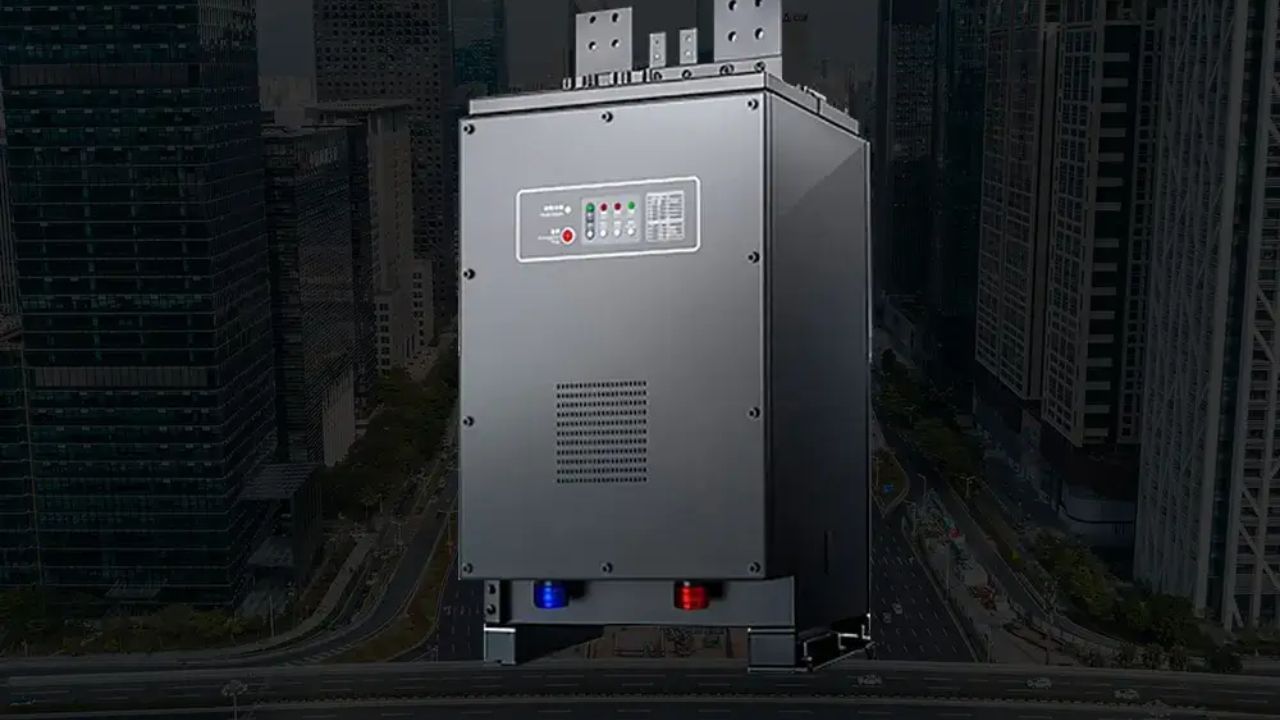
How Do SSCBs Improve Safety in EV Charging Stations
Due to the increased pace of electric vehicle (EV) adoption across the globe, safe and reliable charging infrastructure has become a more urgent concern. The charging stations of electric vehicles work based on direct current (DC) and alternating current (AC) systems of high voltage, which is very hazardous. Mechanical circuit breakers, which are traditional, may fail to react fast enough to an electrical leakage, posing the risk of overheating, fire, or breaker-damaged equipment. The Solid State Circuit Breaker (SSCBs) have become an innovative technology, offering superior safety and protection to EV charging stations.
Understanding Solid State Circuit Breakers
A Solid State Circuit Breaker is an electronic component that regulates electrical current with the aid of semiconductors like Insulated Gate Bipolar Transistors(IGBTs) or Silicon Carbide(SiC) MOSFETs. SSCBs do not require moving parts, as compared to the traditionally operating mechanical breakers. This lack of mechanical elements enables SSCBs to be able to cut electrical faults in microseconds, which is much quicker than mechanical breakers, which require milliseconds to do so. The extremely quick reaction of SSCBs in EV charging stations, where there are high-current surges and DC arcs, which may happen rather often, is vital in avoiding damage to the costly charging equipment and connected vehicles.
The technology of the SSCBs is based on power electronics and digital control. In case the SSCB senses the presence of an overload or a short circuit, it automatically triggers the semiconductor to halt the flow of current. This almost immediate response will avoid the escalation of the electrical faults, securing the charging station and the vehicle battery. The accuracy of SSCBs further makes them particularly apt in terms of modern EV infrastructure, in which sensitive electronics and powerful components are present in a compact space.
Eliminating Arcing and Reducing Fire Risks
Electrical arcing is one of the greatest safety enhancements made by SSCBs to EV charging stations. Arcs are produced on mechanical breakers when the contacts open under load, which can cause heat concentration, metal disintegration, and fire incidents. On the contrary, the SSCBs are totally semiconductor-dependent to interrupt current, generating zero arc. This arc-free operation is especially useful in high-voltage systems operating at DC (typical in fast-charging stations), where DC arcs can be extremely hard to suppress with mechanical switches. SSCBs enhance fire prevention and increase the lifespan of charging devices, since they can remove arcing.
Supporting High-Frequency Switching
EV charging stations often cycle between currents on and off when controlling the amount of power to be delivered to cars. The repetitive nature of the operations in mechanical breakers makes them prone to wear out because of the contact erosion and spring fatigue. SSCBs, on the other hand, are capable of operating millions of switching cycles without much wear, which renders them suitable for busy charging stations. This reliability makes it reliable throughout the duration and reduces the disruptions of maintenance, which is critical to commercial charging networks that need to serve several vehicles each day.
Integration with Smart Monitoring Systems
New EV charging points are becoming increasingly digitalized with smart energy management and monitoring. SSCBs can be easily integrated with such technologies, which will give real-time information about electrical parameters, detecting faults, and energy consumption. IoT-based control will allow the operators to track every charging point, detect unusual situations before they get out of control, and conduct forecasting maintenance. The benefits of such integration are not only a higher degree of safety but also an increase in operational efficiency that can eliminate expensive downtime and provide the reliable EV user experience that the owners require.
Adapting to DC and Renewable Energy Sources
A large number of EV charging stations utilize renewable energy sources or DC fast-charging technology. The conventional mechanical breakers have difficulties with DC arcs and are not able to successfully interrupt DC faults as effectively as AC faults. Capable of operating in DC as well as semiconductors and designed to operate quickly, SSCBs inherently manage DC currents, reducing the risk of high-voltage DC operation. This also enables charging stations to integrate safely solar panels or energy storage systems, which makes the energy infrastructure more sustainable and greener.
Conclusion
Solid-state circuit breakers mark a radical innovation in the level of safety and reliability of an electric vehicle charging station. SSCBs offer the special needs of contemporary EV infrastructure by supporting high-frequency switching, offering ultra-fast fault interruption, arcing elimination, and linking with intelligent monitoring systems. Their capability to operate safely on AC as well as DC currents makes them well adapted to fast-charging as well as renewable-powered stations. With the EV market slowly expanding, the utilization of SSCBs will be vital in making sure that the charging stations are safe, efficient, and able to accommodate the upcoming electric vehicle generation.