Getting 4G Connectivity to Remote Monitoring Sites: What Actually Works
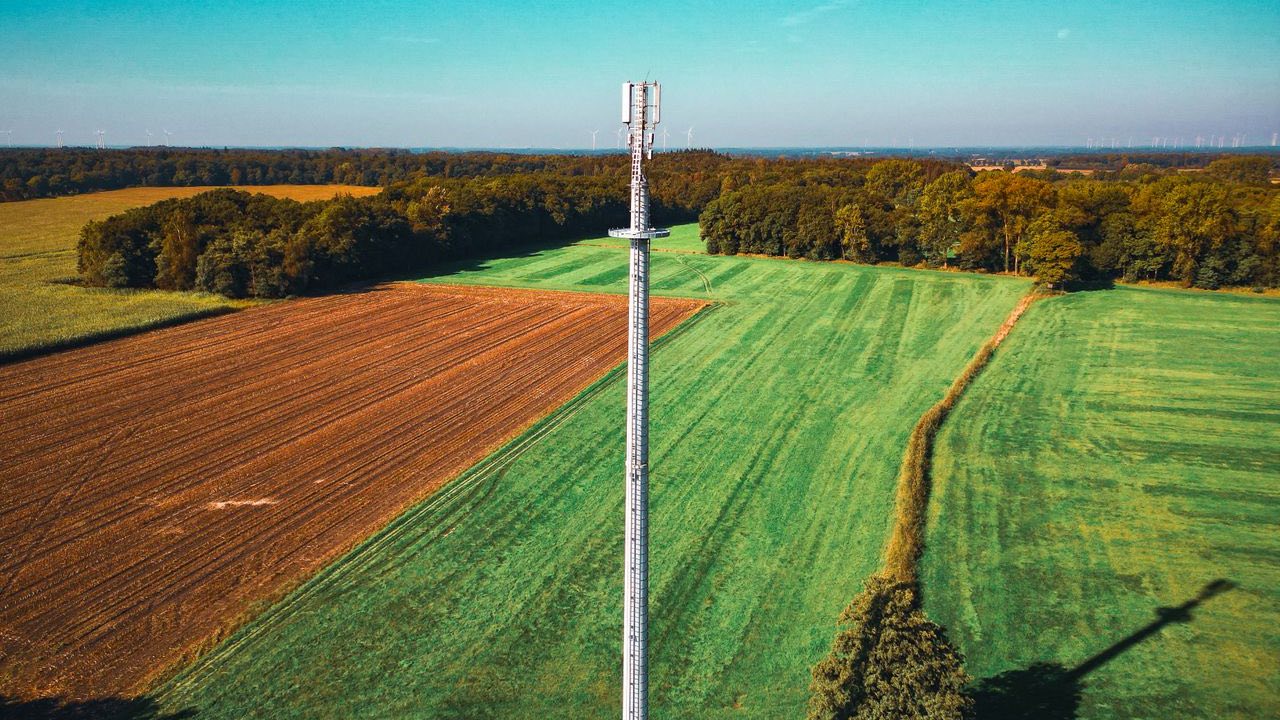
Remote monitoring sites have a connectivity problem that doesn’t resolve itself by throwing more hardware at it. A water treatment facility 15 km from the nearest town, a pipeline pressure monitoring station on agricultural land, a weather sensor cluster on a hilltop — these sites need reliable 4G data uplinks for telemetry, alarm transmission, and occasional remote access. The signal environment at most of them is not good, and the standard approach of plugging in a cellular router and hoping for the best produces inconsistent results.
The problem is almost never the router. It’s the antenna situation, and specifically the mismatch between what the router’s internal antenna can do and what the site’s signal environment actually demands.
Understand the signal environment before choosing hardware
The first step in solving a remote site’s connectivity problem is measuring what’s actually there, not assuming based on carrier coverage maps. Carrier maps are modeled estimates. They show predicted coverage at street level in typical suburban conditions. A site 20 meters above surrounding terrain may have significantly better signal than the map suggests. A site in a valley or behind a ridge may have none at all, regardless of what the map shows.
Running a signal survey with a handheld cellular signal meter, or using a cellular router with signal strength logging while driving around the site perimeter, gives a real picture of what frequencies and signal levels are available. Specifically useful: which band is strongest, what the RSRP (signal power) and SINR (signal quality) values look like, and whether the signal comes from one dominant direction or from multiple towers.
This matters for antenna selection. A site that has a dominant signal from one direction is a candidate for a directional antenna that focuses on that tower. A site with signals from multiple directions needs an omnidirectional approach. Getting this wrong — installing a directional antenna pointed at a weak tower when a stronger one sits 90° away — produces worse results than not having an external antenna at all.
The antenna is where most of the gain comes from
A 4G router with internal antennas in a reasonable outdoor signal environment might achieve -90 to -100 dBm RSRP. A 4G LTE outdoor antenna properly installed at the same site might bring that to -75 to -85 dBm — a difference of 10-20 dB, which translates to meaningfully faster data rates and significantly more reliable uplinks in marginal conditions.
The specific gain depends on antenna type, installation height, and cable run. But the directional-vs-omnidirectional decision is often more important than the gain specification. A 9 dBi directional antenna pointed at the right tower outperforms a 9 dBi omnidirectional antenna even on the same site, because the directional antenna concentrates its gain toward the signal source rather than spreading it in a circle.
For sites where tower direction is known and stable, directional panel or Yagi antennas produce the best results. For sites where multiple towers provide backup coverage and failover matters, omnidirectional antennas preserve coverage from all directions at the cost of some peak gain.
Mounting height has a larger effect than most people expect
At remote sites, terrain is often the limiting factor rather than signal strength per se. A monitoring station mounted at ground level in a grass field may have 3-4 meters of effective terrain blocking between it and the distant tower. Raising the antenna to 6 meters on a pole clears that terrain obstruction and can produce 10+ dB of improvement in received signal level — more improvement than switching from an omnidirectional to a higher-gain directional antenna would achieve at ground level.
For permanent remote installations, investing in a proper antenna mast is usually more cost-effective than iterating through increasingly expensive antenna hardware trying to overcome a terrain problem. A 6-meter galvanized pole with a properly grounded antenna mount, installed correctly, is a one-time cost that solves the problem. A series of antenna upgrades that don’t address the terrain issue is recurring cost that doesn’t.
Cable run between antenna and router
Remote sites often involve some physical separation between where the antenna should be (outside, elevated) and where the router has to be (inside, protected from weather). The cable run between them introduces loss that partially offsets the antenna gain.
LMR-400 cable loses approximately 0.11 dB per meter at LTE Band 28 (700 MHz). A 10-meter run loses about 1.1 dB — manageable. At higher LTE bands like Band 3 (1800 MHz), loss is approximately 0.22 dB per meter, so the same 10-meter run costs 2.2 dB. For runs longer than 10 meters at higher frequencies, the cable loss starts meaningfully eating into the antenna gain benefit.
Two options for managing this: use the lowest-loss cable practical for the run length, or move the router as close to the antenna as the installation allows and run Ethernet rather than coaxial cable for the connection back to the network. A weatherproof outdoor router enclosure directly below the antenna, connected to the indoor equipment via Ethernet, eliminates the coax run length problem and is often the right architecture for sites where long cable runs would otherwise be necessary.
Power and environmental considerations for outdoor antennas
Remote sites often have constrained power budgets — solar-charged battery systems, generator power that may cycle, or grid connections with long runs from a distribution point. Passive antennas (which have no power requirement and simply focus the received signal) are the appropriate choice for most remote monitoring applications. Active antennas with built-in LNAs add gain but require power, add a failure mode, and are only necessary when cable runs are so long that passive antenna performance is genuinely insufficient after properly addressing the installation height and direction.
For sites with extreme temperatures — agricultural monitoring stations in climates with cold winters and hot summers, or coastal sites with high humidity — antenna connector weatherproofing and UV-rated cable jacketing are not optional details. The antenna hardware at a remote site may go 12+ months between physical inspections. Connector failures, UV degradation, and water ingress at cable entry points are the leading causes of remote site connectivity degradation between visits. Getting those details right during installation is considerably cheaper than an emergency site visit to fix a failed antenna connection.