How Smart Locks Are Transforming Modern Home and Commercial Security
Security has been part and parcel of the business and the homeowner. Mechanical locks are the traditional locks that are well-known and are commonly used, but cannot be adapted to new lifestyles and the high-paced business world’s needs. The introduction of a smart lock manufacturer has brought a massive change in the way access is granted, observed, and executed. With the integration of digital technology and a superior level of security, the use of smart locks is changing residential and commercial security systems and setting new standards in terms of safety and convenience.
Mechanical Keys to Intelligent Systems
The traditional locks are based on physical keys that may be lost, copied, or stolen without the knowledge of the owner. Smart locks supplement or eliminate these conventional mechanisms with the addition of electronic authentication systems like fingerprints, facial recognition, PIN code, RFID cards, and mobile apps. With this transition, the reliance on physical keys will be minimized, and the users will be able to digitally manage access. Due to this, security will be more adaptable and will be able to respond to real-world demands, particularly where a number of users are in need of regulated access.
Improved Group Security Biometrics
Biometric authentication is one of the most influential factors that smart locks are altering the nature of security. Fingerprint and facial recognition technology is more secure since it is based on personal biological characteristics that are hard to duplicate. At home, this makes sure that only the family members or known personalities are allowed to enter the home. Biometric smart locks are used in business premises to ensure organizations can exclude unauthorized entry into restricted zones to protect confidential information, assets, and equipment.
Remote Access and Real-Time Surveillance
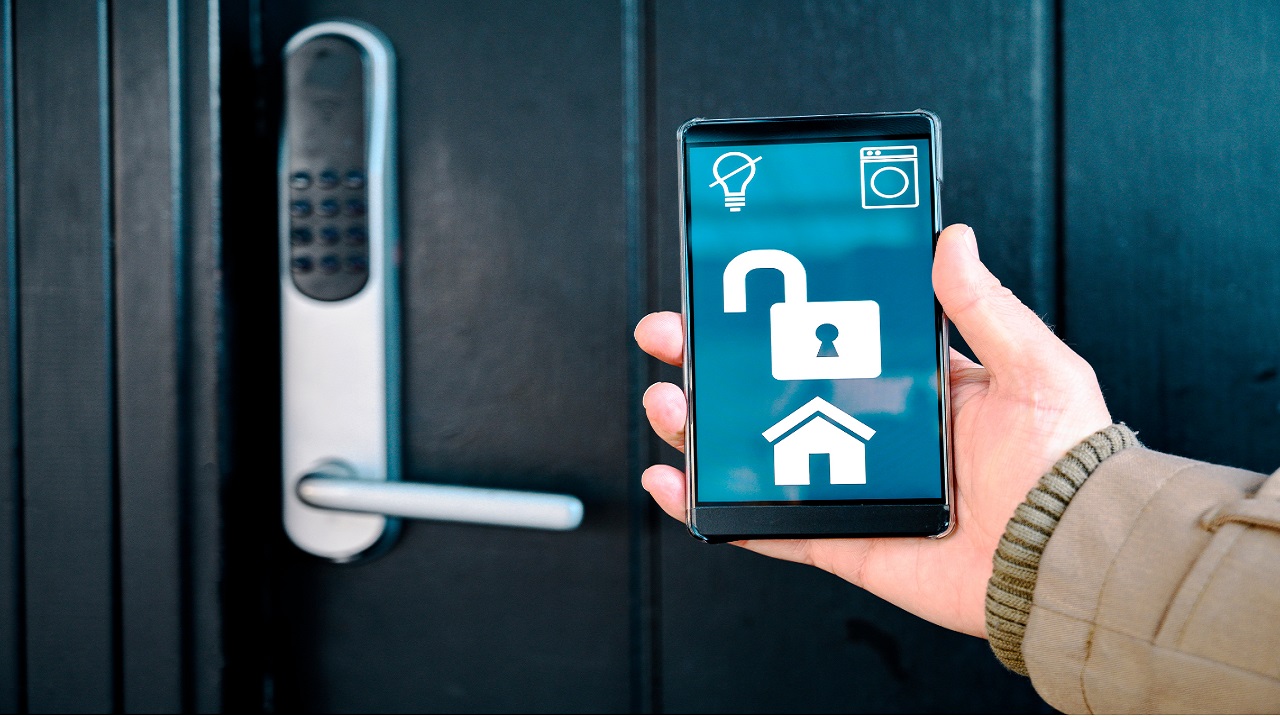
Smart locks also bring the option of remotely controlling and monitoring access, which is a significant improvement over the conventional system. With integrated applications, users can remotely lock and unlock doors, provide guests with temporary access, and get real-time access information on door activities. To the homeowners, this will result in more peace of mind when they are not at home. In the case of business, remote access control helps in managing businesses that are spread across various locations, and it also enables the administrator who is not present to quickly react to security issues.
Better Access Control to Business Premises
Key management of employees, contractors, and visitors may be inefficient in a commercial setting. Smart locks facilitate this process because the administrators can assign, modify, or revoke authorizations in real-time. The staff members can be provided with time-based access, which means that they can only gain entry during authorized times. The control is not only better at security but also better at efficiency of operations, especially within offices, hotels, coworking spaces, and industrial premises.
Smart Building Ecosystems Integration
The other changing factor that comes with smart locks is that they can be connected with more comprehensive smart home and smart building systems. Smart locks are integrated in a full-scale security network when linked to surveillance cameras, alarm systems, and building management platforms. This type of integration is also used in homes to enable automation of situations like automatically locking doors when leaving the house or sending alerts when suspicious activity is detected. The centralized security management and data-driven decision-making are achieved with the help of integrated systems in commercial buildings.
More Convenience with No Safety Tradeoffs
Although the first role is security, convenience also has a major role in the usage of smart locks. The feature of not using keys to open doors, control access using digital keys, and keeping a record of who opens them is an added feature of usability that the classic lock cannot provide. Significantly, this convenience is not obtained at the cost of safety. The contemporary smart locks are engineered in a manner that supports encryption, anti-tamper, and backup access features so that in extreme conditions like power outages or connectivity issues, they remain reliable.
Modern Lifestyles and Business Models
The emergence of intelligent locks is in line with the evolving lifestyles and business activities. They facilitate access management in residential locations where they assist in the support of rental property, temporary lodgings, and cohabitation. In the business community, smart locks are needed in flexible workplaces, remote working, and in industries that value the security of their premises. Their flexibility also causes them to be applicable in a great diversity of applications, both in personal homes and in massive business enterprises.
Conclusion
Smart locks are transforming the situation in the field of modern home and commercial security by providing intelligent, flexible, and user-oriented solutions. They overcome the shortcomings of the traditional locking mechanisms through sophisticated authentication, remote management, and system integration. With the further development of technologies, the impact of smart locks is likely to be even more significant in establishing new security standards, securing properties, simplifying them, and adapting them to the requirements of modern life and business activities.