Underground vs. Surface Mining: How the Equipment Requirements Actually Differ
The distinction between underground and surface coal mining is obvious at the scale of the operation — one happens inside the earth, the other doesn’t. What’s less obvious until you’ve worked both sides is how fundamentally different the equipment requirements become once you get past the broad categories. It’s not just that underground uses smaller machines because the tunnels are small. The entire approach to cutting, loading, drilling, and wear management is different, and the reasons why matter if you’re making decisions about equipment, wear parts, or maintenance scheduling.
The cutting problem underground versus on the surface
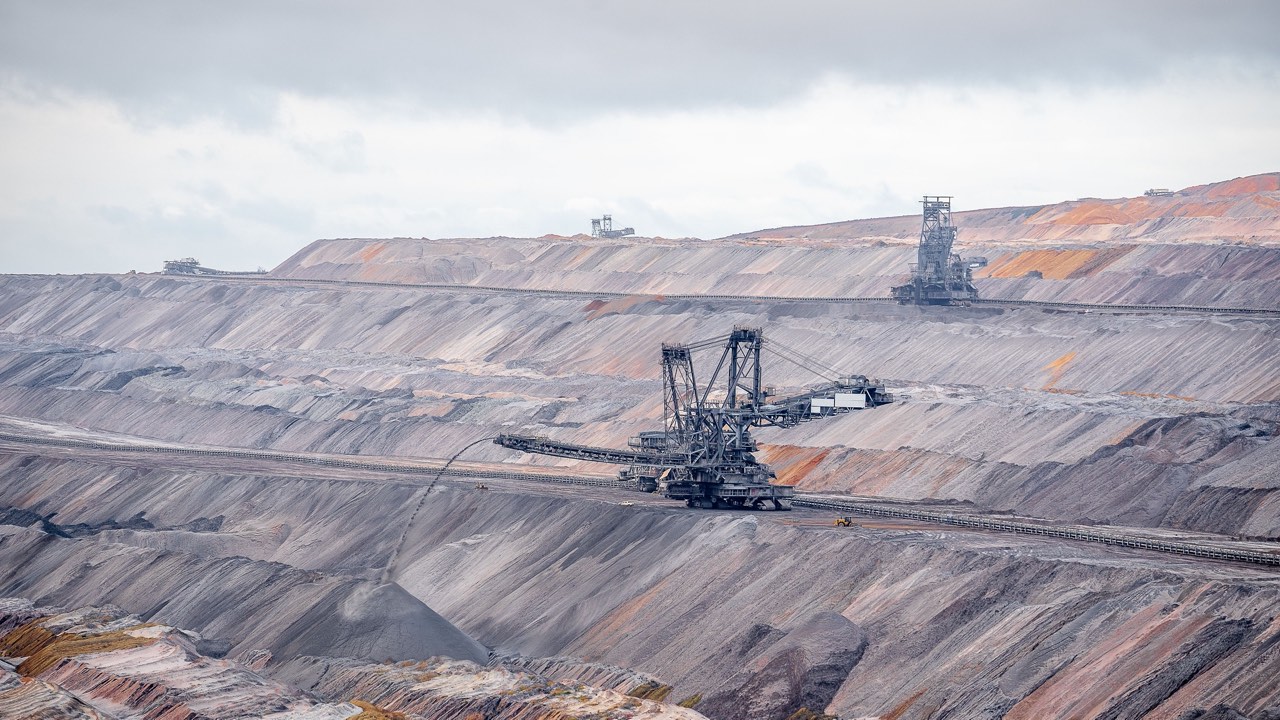
Surface mining — draglines, shovels, and front-end loaders working open-cut benches — attacks coal from above. The coal is exposed, the geometry is predictable, and the machine has room to work. Wear on surface mining equipment is primarily from abrasion against the coal face and from hauling abrasive material across bucket lips and truck beds. The relevant wear parts are bucket teeth, lip protectors, and ground-engaging tools on dozers and scrapers.
Underground mining is a different mechanical problem. In longwall operations, a shearer drum with cutting picks travels along the coal face, extracting material in a continuous pass. The coal isn’t just being scooped — it’s being fractured and fragmented by repeated percussion from picks rotating at high speed against the face. The cutting picks need to fracture the coal efficiently while managing the rock inclusions, pyrite nodules, and roof material that inevitably enter the cutting zone.
In room-and-pillar operations, continuous miners do similar work with a drum head, and development headings require drilling and blasting before any cutting equipment engages the face. The drill bits used in development — button bits and cross bits for roof bolting and blast hole drilling — see very different wear than surface drill bits working in open air where cuttings flush easily and the operator can observe the bit.
Why space constraints change everything underground
On a surface mine, the haul truck, the excavator, and the workshop are all accessible. When a machine needs parts, you drive the parts to the machine or the machine to the workshop. The downtime for a maintenance intervention is bounded by how long the work takes.
Underground, access is constrained. The width of the decline or the height of the roadway determines what equipment can reach the face. A longwall system is assembled underground during installation and the individual components — the shearer, the armored face conveyor, the roof supports — can’t simply be swapped out. When something wears, the replacement has to come down the decline or the shaft, and the time between identifying the problem and completing the repair includes the logistics of getting the part to the face.
This changes the economics of wear part management considerably. Underground operations carry more inventory than comparable surface operations because running out of a critical wear part underground isn’t a one-hour problem. The carrying cost of that inventory is real, but it’s substantially smaller than the cost of a longwall going idle while a replacement pick set is located and transported to the face.
The flushing and dust management dimension
Surface drilling clears cuttings with air or water, and the cuttings fall away from the hole under gravity or get washed out by the flush. The bit operates in conditions where spent material is continuously removed and the cutting face stays relatively clean.
Underground drilling — roof bolting, pre-split drilling, drainage holes — operates in confined spaces where flushing effectiveness directly affects bit life. Cuttings that don’t clear the hole pack around the bit and create secondary abrasion on the shank and body that the bit wasn’t designed to handle. In wet or muddy conditions, the cuttings can form a paste that’s harder to flush than dry cuttings, and the bit works against increasing resistance even as the hole deepens.
The button profile on bits for underground applications is often selected partly on flushing performance — a button geometry that creates larger, more uniform cuttings that flush more cleanly can outperform a geometry that cuts faster but generates fine material that packs. Surface operations have more latitude here because the flushing environment is less constrained.
Ground support requirements and their effect on drill bit selection
Surface operations don’t roof bolt. Underground coal mines bolt extensively — roof bolts are the primary ground support mechanism in roadways and development headings, and bolt installation requires drilling into the immediate roof in varying rock conditions.
Roof rock conditions underground are not uniform. The immediate roof over a coal seam might be shale, sandstone, mudstone, or carbonaceous material depending on the seam location and geology. A button bit sized and graded for medium-strength sandstone will struggle in hard conglomerate and waste carbide in soft mudstone. Operations that pre-characterize the roof geology and match the bit selection to it consistently achieve better bolt installation rates and longer bit life than those using a single standard specification for all conditions.
This is the same principle that applies to drill bits in any mining context, but it’s more operationally significant underground because the roof conditions directly affect safety — a poorly drilled hole doesn’t anchor the bolt effectively, and an underanchored bolt doesn’t support the roof as designed.
How wear part strategy differs between the two environments
Surface operations can optimize wear part strategy around cost per ton — the metric that captures how much wear part expenditure goes into each tonne of coal extracted. The calculation is relatively straightforward because production volumes are large, wear rates are consistent, and replacement intervals can be tracked reliably.
Underground wear part strategy is more constrained by availability and access. Cost per ton still matters, but the dominant concern at many operations is ensuring continuous availability of the critical parts that would stop production if they ran out. The wear part spec that performs best in the lab or even in field testing at another mine matters less if the lead time to reorder is three weeks and the operation runs out in two.
For both environments, sourcing wear parts from a supplier who can provide consistent specifications and reliable availability matters more than marginal differences in catalogue price. Visit JYF Machinery for the range of cutting picks, drill bits, and mining wear parts suited to both surface and underground applications — the product range covers the common configurations for each environment rather than offering a single spec across both.
The physical difference between the two mining environments is obvious. The equipment and wear part implications that follow from that difference are what drive the real decisions.