Why Cashmere Blankets Feel the Way They Do — and Whether the Price Is Justified
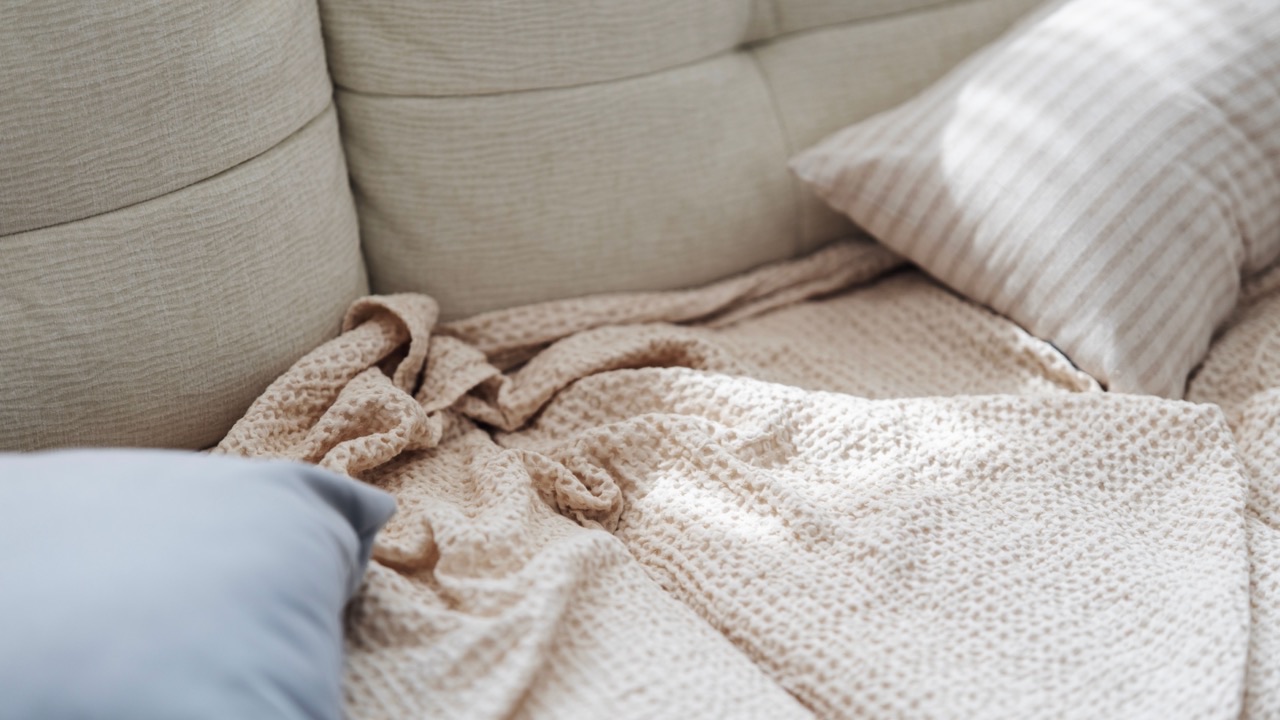
There’s a specific moment when you first pick up a cashmere blanket — not a product labeled cashmere, but a good one — where the weight and texture are noticeably different from everything else you’ve held. It doesn’t feel dramatically heavier or thinner. It feels more substantial somehow, without the bulk. The surface is smooth in a way that’s difficult to describe without the physical reference.
That sensation has an explanation. Understanding it makes it easier to evaluate whether you’re actually getting cashmere when you spend the money on it — and whether the money is worth spending.
What makes cashmere feel different
Cashmere comes from the undercoat of cashmere goats, primarily from Mongolia, Inner Mongolia, and parts of Central Asia. The fiber is harvested once a year, either combed or shorn, and the usable portion — the fine inner coat rather than the coarser outer guard hairs — has to be separated out before spinning.
What makes cashmere distinctive is the fineness of the fiber. Measured in microns (millionths of a meter in diameter), high-grade cashmere typically runs between 13 and 15.5 microns. For comparison, human hair is around 70 microns; standard sheep’s wool varies from about 18 to 40 microns depending on breed. The finer the fiber, the more it bends easily against the surface of skin rather than scratching — which is why cashmere feels soft while coarser fibers feel itchy.
The fiber structure also plays a role. Cashmere has tiny scales along its surface like all protein fibers, but the combination of fine diameter and longer staple length (the length of each fiber) means the scales don’t catch on skin or on other fibers as aggressively. This contributes to the smoothness and to why cashmere drapes differently than cotton or polyester — it moves with more fluidity because each fiber flexes independently rather than resisting.
The problem with the label
“Cashmere” on a label tells you the fiber type but not the grade — and the grade is what determines whether it feels the way cashmere is supposed to feel.
Fiber grade in cashmere is primarily determined by micron count and staple length. Grade A cashmere (finest, longest) produces blankets that are immediately soft, maintain their softness through washing, and pill only minimally. Lower-grade cashmere — shorter fibers, higher micron count — produces blankets that feel acceptable initially but pill heavily within weeks of use and lose their softness as the short fibers break and shed.
The label says cashmere in both cases. The price might be similar. The experience is not.
Grade A cashmere typically comes from adult goats from high-altitude regions where cold winters cause the goats to grow a particularly fine undercoat. It’s more expensive to source because there’s genuinely less of it. A cashmere blanket priced at $80 is almost certainly not using Grade A fiber; a cashmere blanket at $300 might be, depending on the maker.
The indicators to look for: micron count disclosed (under 15.5 is meaningful), country of origin specified (Mongolian and Inner Mongolian cashmere have a strong reputation for quality, and transparency here is a positive sign), and the brand’s willingness to describe their sourcing. Makers using good cashmere tend to say so specifically because it’s a differentiator worth communicating.
Whether it gets better or worse over time
This is the question that separates cashmere from most other materials. Good cashmere blankets are one of the rare objects that actually improve with careful use. The fibers soften gradually as they’re washed gently and used, because the fine scales flatten slightly over time. A cashmere blanket at year three, washed properly and used regularly, is often softer to the touch than it was when new.
This is only true of quality cashmere. Low-grade cashmere goes in the other direction — the short fibers pill, shed, and leave the surface rougher and thinner than when it started. The trajectory at six months tells you a lot about which category you’re in. Quality cashmere shouldn’t pill significantly; if it is, the fiber grade was low.
The care requirements to get that positive trajectory: cold water, gentle or hand wash cycle, a detergent without enzymes, and flat drying. The fiber is protein-based and degrades with heat, agitation, and enzyme exposure the same way all animal fibers do.
Who should actually buy a cashmere blanket
The honest answer is that cashmere is not for everyone and isn’t the right choice in every situation. If you have children or pets that will be on the blanket constantly, cashmere’s higher care requirements and lower resilience to rough handling make it a poor fit. A well-made alpaca blanket — which is more durable than cashmere, similarly soft, and easier to wash — is a better choice for high-use environments.
Cashmere is the right choice when the use case is considered: a bedroom blanket used by adults who will hand wash it, or a living room throw that gets regular but not aggressive use. In those contexts, the tactile experience is genuinely better than any alternative, and the longevity of well-cared-for cashmere justifies the initial investment.
For cashmere blankets and throws specifically, the things worth verifying before buying: fiber grade and origin disclosed, construction that’s tight enough to resist pilling (hold it up to light — you shouldn’t be able to read through it), and a brand that’s been transparent enough about their materials that you have some basis for trusting the label.
Whether the price is justified
This depends on what you’re comparing it to. Cashmere is not justified as a replacement for a $30 fleece — the use cases are different, and the comparison doesn’t make sense. It’s justified as a replacement for repeated purchases of mid-range blankets that don’t provide the same experience and don’t last as long.
If you spend $250 on a good cashmere blanket and it lasts fifteen years with proper care, you spent $16 per year on something that you’ll reach for every time rather than leaving it folded in a corner. The number works. The question is whether that particular blanket is actually using the cashmere grade that makes the experience worth the price — which is why what the brand discloses matters before you spend the money, not after.