What Laser Ignition Is and Where It's Used Beyond Automotive Applications
Most coverage of laser ignition focuses on internal combustion engines — the idea of replacing a spark plug with a focused laser beam has attracted attention from automotive researchers for years. But the automotive application is actually one of the later arrivals in laser ignition’s development history. Industrial, aerospace, and energy sector applications were driving research into laser-based ignition long before anyone was seriously fitting laser igniters to car engines, and those applications remain the primary market for the technology today.
Understanding where laser ignition is actually deployed, and why those environments demand it, gives a clearer picture of what the technology is genuinely good at.
What laser ignition does differently
In conventional electrical ignition, a spark discharge creates a small plasma kernel at a fixed location — typically between two electrodes close to the cylinder wall or combustion chamber edge. The flame front grows outward from that fixed point and must travel across the full combustion volume to complete burning.
Laser ignition works differently. A pulsed laser beam is focused to a small spot inside the combustion chamber — not at the wall, but potentially anywhere in the volume that the optical system can reach. At the focal point, the intensity is high enough to ionize the gas mixture and create a plasma, which initiates combustion. The key distinctions are: the ignition point can be placed anywhere the laser can reach, not just at an electrode; there’s no physical contact with the hot gas environment; and the timing and energy can be controlled electronically with high precision.
Industrial gas turbines
This is one of the most established non-automotive applications. Gas turbines used in power generation and industrial compression face significant ignition challenges: the combustion chamber operates at high pressure and temperature, the fuel-air mixture near ignition is often lean and difficult to ignite reliably, and the geometry of annular combustors makes electrode placement physically difficult.
Laser igniters address several of these problems. By delivering ignition energy through an optical path rather than a physical electrode, the system can ignite at locations within the combustor that are unreachable by conventional igniters. High-altitude re-light capability — restarting an engine at altitude where the air is thin and cold — is particularly demanding, and laser systems have demonstrated reliable ignition at conditions where conventional igniters struggle.
The absence of erosion is also significant. Conventional gas turbine igniters use high-energy electrical discharges that gradually erode the electrode. Laser igniters have no electrode in the combustion zone, so the system is not subject to the same wear mechanism. For large industrial turbines where downtime is expensive, reduced maintenance frequency is a real operational benefit.
Natural gas engines and stationary power generation
Large-bore natural gas engines used in pipeline compression, power generation, and industrial applications often run on lean fuel-air mixtures to reduce emissions. Lean-burn combustion is more efficient and produces less NOx than stoichiometric or rich combustion, but lean mixtures are harder to ignite reliably — they require more ignition energy or more precise timing to achieve consistent flame initiation.
Laser ignition suits lean-burn natural gas engines well because it can deliver ignition energy at precisely the right moment and location, with the flexibility to adjust timing electronically. Several programs have demonstrated that laser ignition reduces cycle-to-cycle combustion variability in large-bore gas engines, which improves efficiency and reduces emissions compared to conventional pre-chamber igniters.
Aerospace propulsion
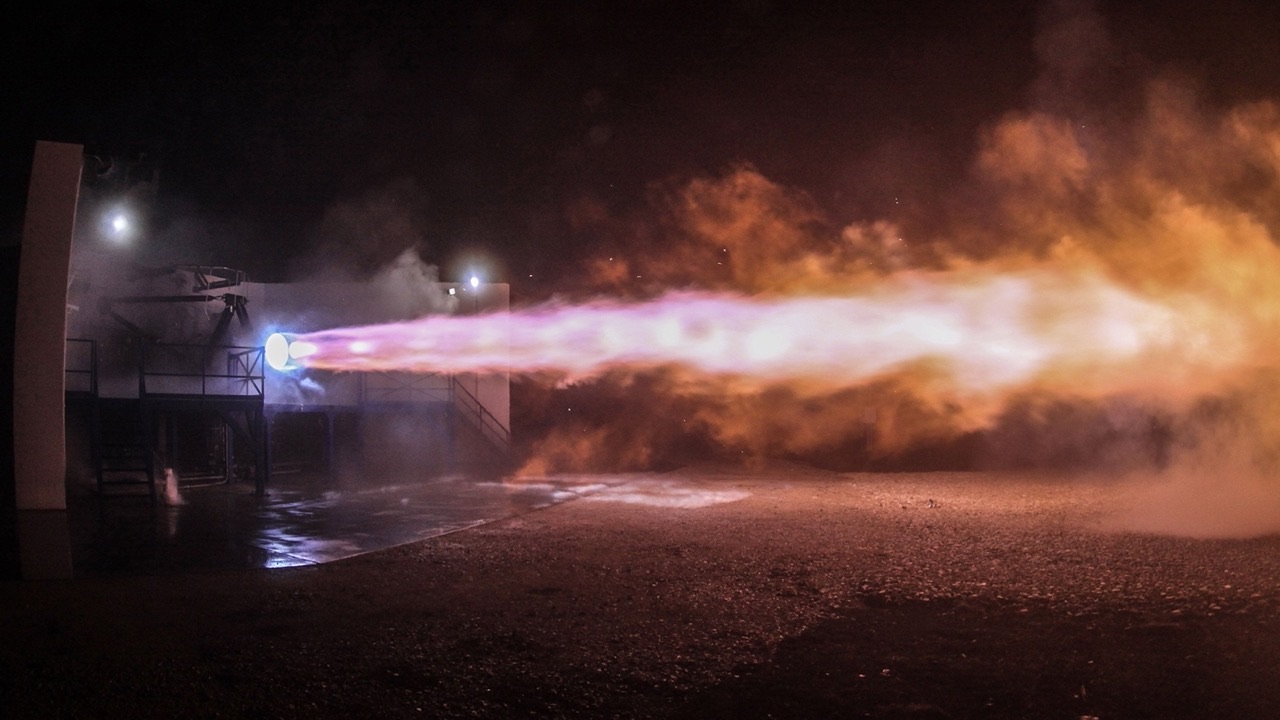
Liquid-fuelled rocket engines present an extreme ignition environment. High-pressure propellant injection, cryogenic temperatures at startup, and the need for absolutely reliable ignition on first attempt (in space, there’s no restart option if ignition fails) make this a demanding application for any ignition system. Laser ignition has been explored for liquid rocket engines precisely because it offers controllable, repeatable energy delivery without requiring physical igniters in the propellant stream.
Hypersonic propulsion is another area of active research. Scramjet engines must ignite and sustain combustion in supersonic airflow — a challenge so severe that conventional ignition methods struggle to maintain stable combustion. Laser ignition at precise locations within the supersonic flow has shown promise in research settings as a way to initiate and sustain the necessary chemistry.
Laser-initiated explosive and pyrotechnic systems
A distinct but related application is the use of laser energy to initiate pyrotechnic and explosive devices. Laser-initiated ordnance (LIO) uses a laser pulse delivered through an optical fiber to ignite a pyrotechnic charge. The advantages over electrically initiated systems include inherent immunity to electromagnetic interference (no electrical conductors near the charge), the ability to achieve very precise timing, and the ability to confirm the optical path is intact before initiating.
This approach is used in aerospace pyrotechnic systems (stage separation, payload fairing release, ejection seat initiators) and in some military ordnance where EMI immunity is critical. The laser ignition components used in these systems are purpose-designed for reliability and are specified to far tighter tolerances than general industrial components.
Research and laboratory applications
Beyond production applications, laser ignition has been extensively used as a research tool. Being able to place the ignition point precisely anywhere in a combustion volume, and to vary the timing and energy electronically, makes it a useful instrument for combustion research. Studies on flame initiation, minimum ignition energy across different mixture compositions, and the effect of ignition location on combustion development have all used laser ignition systems because of the control and repeatability they provide.
This research use has contributed significantly to understanding of combustion physics that is now applied in the design of lean-burn gas turbines and engines.
Why these applications and not others
The pattern across these applications is that laser ignition is chosen where conventional ignition hits a physical limit: electrode erosion in harsh environments, inaccessible ignition locations, strict requirements for repeatable timing, EMI vulnerability, or the need to ignite difficult lean or low-pressure mixtures. In everyday spark ignition applications where conventional igniters are reliable and cheap, laser systems don’t offer enough advantage to justify their cost.
As laser source costs continue to fall and optical packaging becomes more compact, the range of applications where laser ignition is economically justified is gradually expanding — but the technology will continue to be most competitive at the difficult end of the ignition problem, where the constraints that motivated its development in the first place still apply.