What International Buyers Should Know Before Sourcing Whole-House Furniture From China
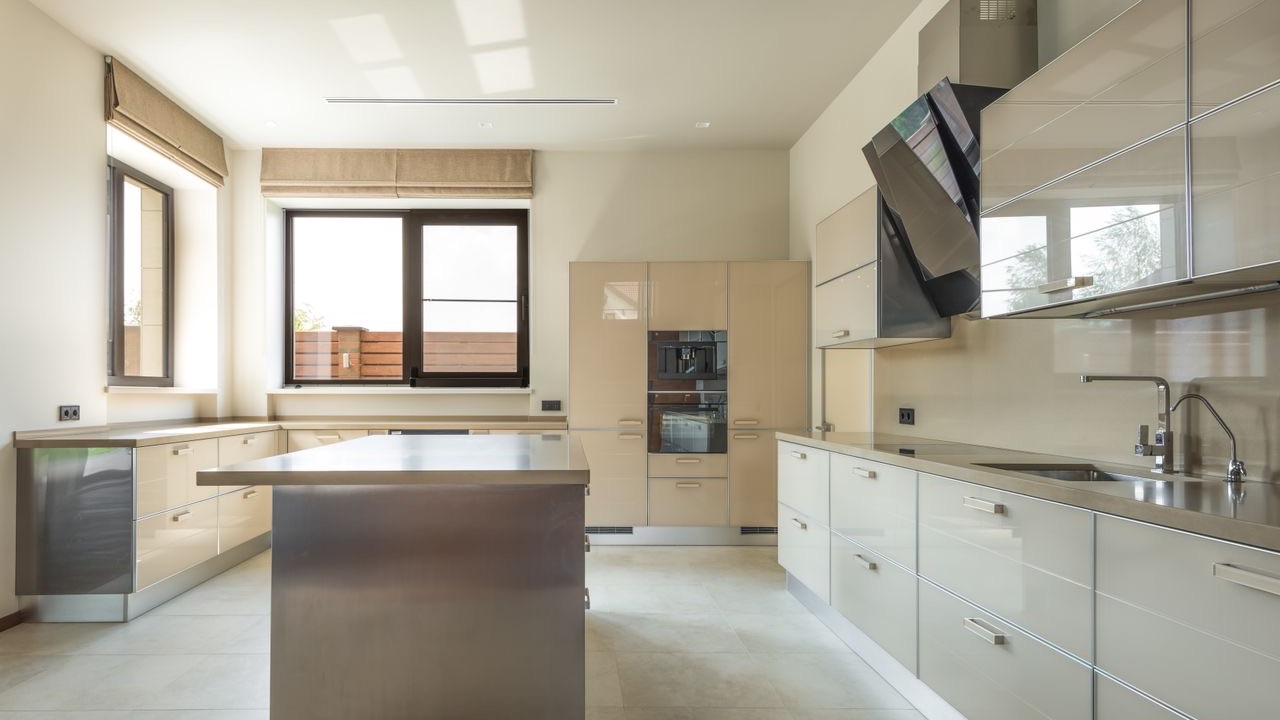
Sourcing furniture from China for international projects is common practice. Sourcing whole-house customized furniture — kitchen cabinets, wardrobes, wooden doors, wall panels, all configured to specific dimensions — from China for international projects is a different and more demanding undertaking. The logistics, quality verification, and project coordination challenges compound at every stage, and buyers who approach it the way they’d approach sourcing a standard product category get surprised by what they didn’t account for.
That said, the economics and capability case is real. The combination of production scale, design investment, and certification compliance at large Chinese furniture manufacturers has reached the point where the total cost and quality outcome compares favorably to European alternatives for a wide range of projects. Navigating the process well is the variable.
The design and measurement phase is more critical than for standard products
Standard furniture can be specified from a catalog and shipped. Customized furniture that fits specific rooms requires accurate measurement, design confirmation, and dimensional sign-off before production starts. This phase is more consequential for an international project than a domestic one because the feedback loop is longer.
For domestic projects, a designer or dealer can visit the site, verify measurements, produce the design, and confirm it in a meeting that takes a day. For an international project, the site is in a different country from the factory. Measurement errors caught at installation cost time and money in proportion to the distance between factory and site. A wall that was supposed to be 3.2m turned out to be 3.17m, and the custom wardrobe designed to fill it now requires a filler panel — on a domestic project, that’s a minor rework; on an international project, it may mean waiting weeks for the panel.
The practical implication is that measurement verification deserves more rigor on international projects than buyers typically give it. Having an independent measurement verified against the design before production sign-off, rather than relying on a single site measurement, catches the errors that would otherwise surface at installation.
Factory qualification matters more than price
The price range across Chinese furniture manufacturers is wide, and the quality range is equally wide. For buyers without existing knowledge of the Chinese furniture market, the temptation is to compare quotes and choose the most competitive. This is how buyers end up with furniture that looks acceptable in photos but has formaldehyde emissions above the certification threshold for their destination market, or dimensions that are inconsistently machined, or finishes that photograph well but don’t hold up to normal use.
Factory qualification for international orders should cover: product certifications relevant to the destination market (CARB Phase 2 for North America, EN 717-1 for Europe), production scale and order history for projects of similar complexity, design capability verified by portfolio review, and references from buyers in markets with similar specification standards.
Companies like piano china that are listed on domestic stock exchanges and maintain international certification as standard practice have compliance infrastructure that smaller manufacturers don’t. For buyers who need certification documentation for retail sale or building compliance, that infrastructure matters practically, not just as a signal of quality.
Lead time planning has less buffer than buyers expect
Whole-house customized furniture has longer production lead times than standard stocked products because everything is made to order. Lead times from order confirmation to factory shipment typically run 45–60 days for a full whole-house scope at a well-run factory. Add ocean freight (3–6 weeks depending on destination), customs clearance, and inland delivery to site, and the total timeline from order to installation-ready is typically 10–16 weeks.
For a residential development project, this timeline has to be integrated with the construction schedule. Furniture arriving before the space is ready for installation requires storage that increases risk of damage and adds cost. Furniture arriving after the completion date holds up handover. The lead time needs to be planned against the construction program, not treated as something that will work itself out.
Changes after production starts extend lead times. This is true for any customized order, but it’s worth emphasizing for international orders where the temptation to make a change — and the delay before the implication becomes visible — is greater.
Container loading and freight packaging
Customized furniture for international shipment needs to be packaged and loaded in a way that accounts for the handling conditions of ocean freight. Cabinet carcasses, wardrobe panels, door frames, and wall panels are large, dimensionally precise, and susceptible to moisture and impact damage during a multi-week ocean transit.
The packaging standards for furniture shipped domestically within China are not always appropriate for international freight. Buyers placing significant orders should confirm with the factory what the export packaging standard is — specifically whether cartons are reinforced for ocean transit, whether moisture barriers are used, and how components are secured within containers to prevent movement during handling.
Container loading sequence matters too. Components needed first at installation should be loaded last. A factory that loads containers in production completion sequence rather than installation sequence will deliver a container where the first things you need are buried at the back.
Handling the installation from a distance
Installation of whole-house customized furniture requires skilled installers who understand the assembly systems. For an international project, finding qualified installation crews in the destination market who are familiar with the specific manufacturer’s systems is often challenging.
Options include: having the manufacturer provide or recommend installation supervision from China (practical for large projects, adds cost), providing detailed installation documentation and running the installation with local carpentry crews who have relevant experience, or hiring an international project management firm that specializes in furniture fit-outs.
The installation documentation provided by the manufacturer is a meaningful quality indicator. Manufacturers who export regularly have comprehensive multilingual installation guides, component-level assembly diagrams, and site support contacts for troubleshooting. Those who export occasionally don’t. This is worth assessing before committing to an order — poor documentation discovered at installation, on a site in another country, is a difficult problem to solve quickly.